10 Red Flags in a Roofing Estimate — What to Watch For Before You Sign

Getting three estimates for a roof replacement is good advice — but only if you know what you’re comparing. A low estimate isn’t always a deal, and a detailed-looking estimate can still hide significant gaps.

Here are the 10 red flags we see most often in roofing estimates presented to homeowners in Lake County and northern Illinois.

Red Flag 1 — No Specific Material Brands Listed

A legitimate roofing estimate names the specific shingles being installed: “GAF Timberline HDZ Charcoal” not “architectural shingles.” Vague material descriptions allow material substitution after you’ve signed — a practice that’s technically legal if your contract doesn’t specify brands.

What to ask: “What specific brand, product line, and color will be installed? Please add that to the written estimate.”
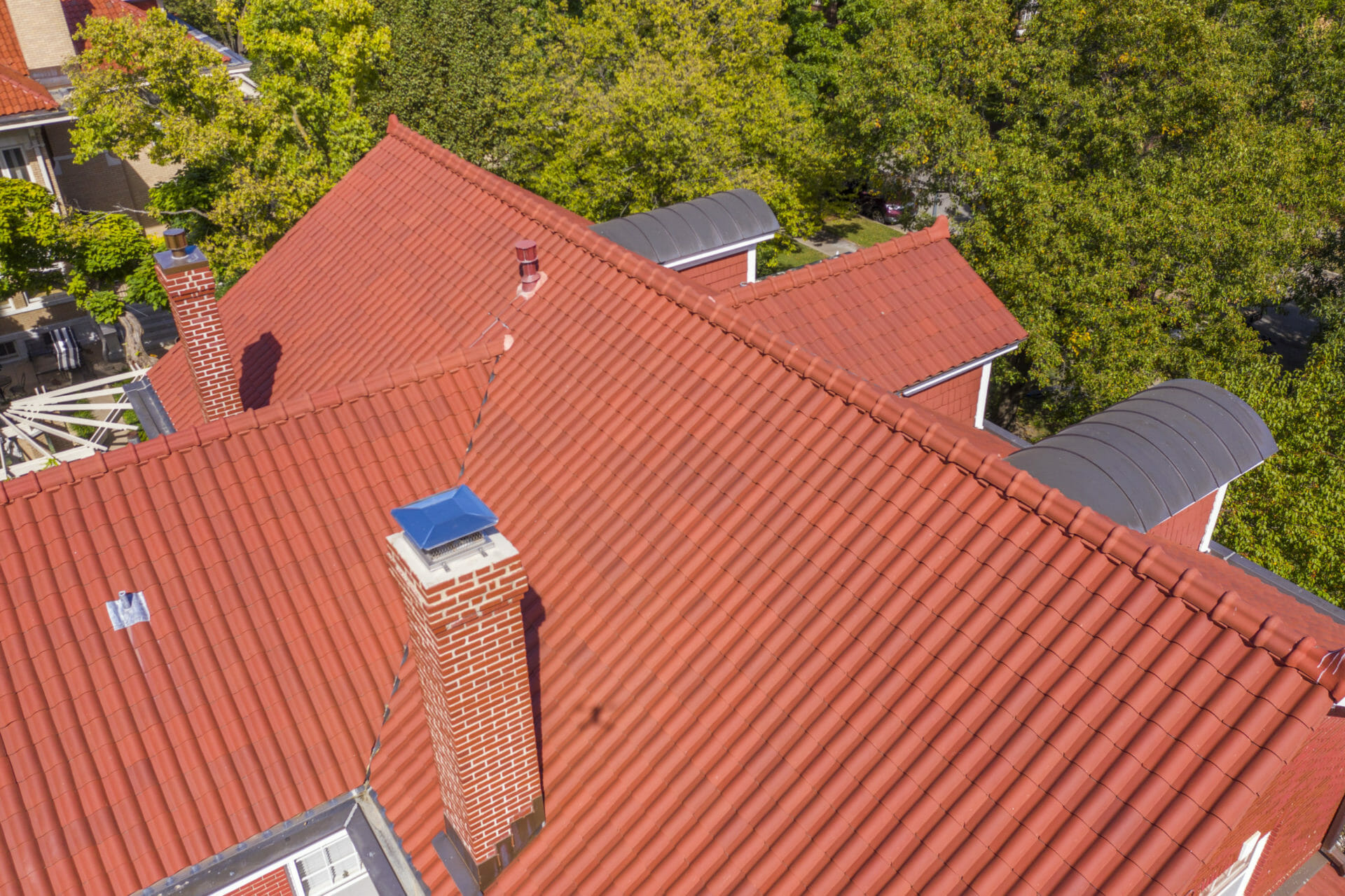
Roofing project by Alamo Roofing

Professional inspection ensures no damage goes undetected

Red Flag 2 — No Mention of Ice and Water Shield

Ice and water shield is a critical component for Lake County and Porter County roofs — required by Indiana building code and essential for ice dam protection. If an estimate doesn’t mention it, they’re either not installing it or burying it in a vague “materials” line item.

What to ask: “Is ice and water shield included? Where will it be applied — just at eaves, or in valleys too?”

Red Flag 3 — “Lifetime Warranty” With No Details

“Lifetime warranty” without specifics is meaningless. Whose lifetime — yours, the contractor’s, or the shingle? What does it cover — materials, workmanship, or both? Who backs the workmanship — the contractor or the manufacturer?

What to ask: “Please provide the warranty documentation in writing, including what’s covered, how long, and who backs the workmanship warranty if you go out of business.”

💡 Pro Tip

Schedule a professional inspection within 30 days of any major storm. Early detection prevents costly repairs down the road.

Red Flag 4 — No Permit Mentioned

Every roofing project in Lake County and northern Illinois requires permits. If an estimate doesn’t mention permit costs, either they’re not planning to pull permits (a serious problem) or they’re going to add the cost later.

What to ask: “Is permit application and fee included in this estimate? Will you pull the permit before work starts?”

Red Flag 5 — Tear-Off Cost Missing

Removing your old shingles is a significant labor cost. If an estimate says “roof replacement” without a separate tear-off line item, clarify whether tear-off is included or will be added.

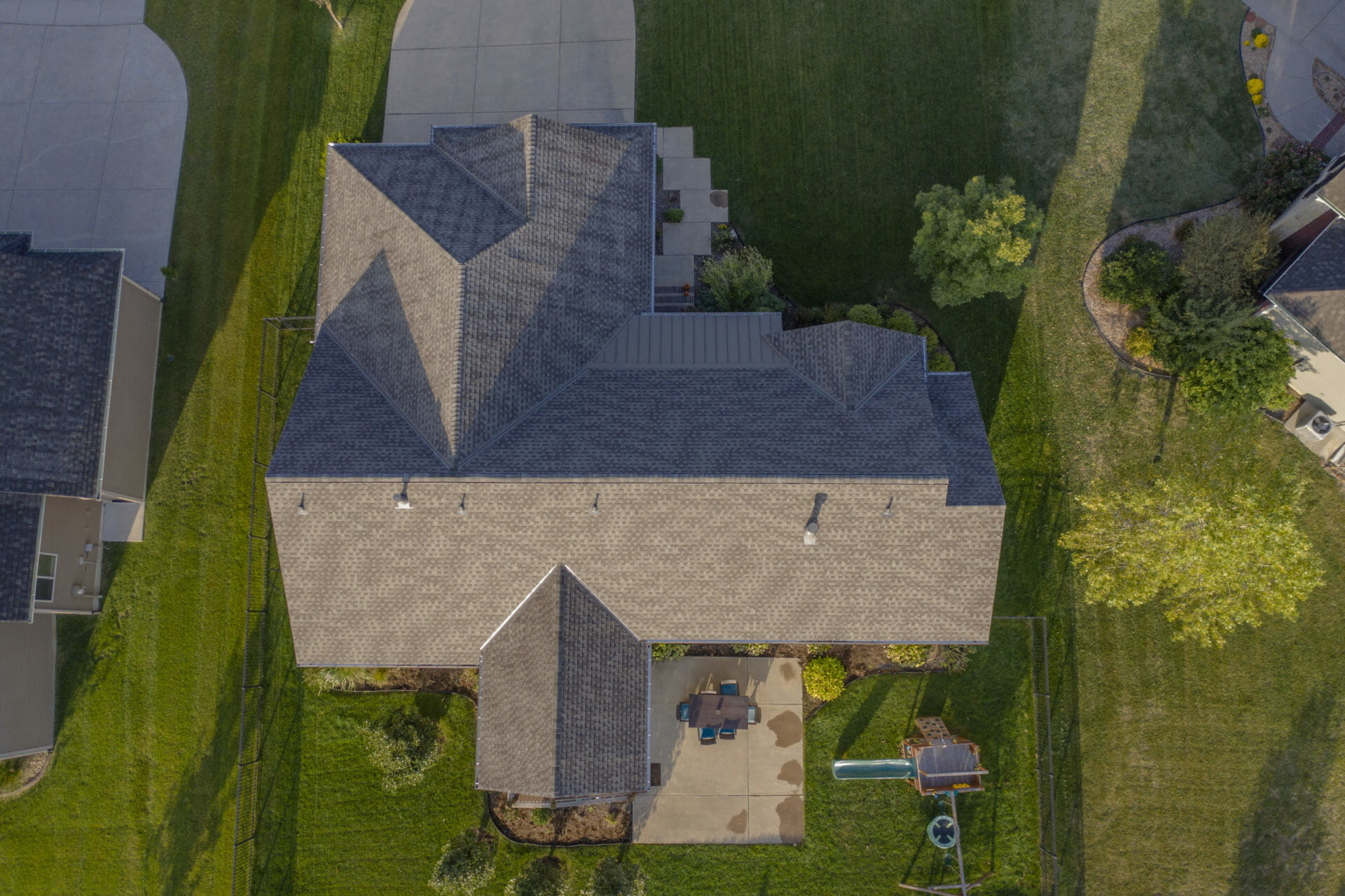
Residential shingle roofing

Quality materials and expert installation make the difference

Red Flag 6 — No Decking Allowance

What’s found under your shingles is unknown until tear-off. Legitimate estimates either include a per-sheet decking repair allowance or clearly state the policy: how will decking replacement be priced if needed? “Decking replacement extra” is fine — no mention of decking at all is a red flag.

Red Flag 7 — Drip Edge Not Listed

Drip edge (the metal edging along your eave and rake edges) is required by current Indiana and Illinois building code on all re-roofing projects. If it’s not in the estimate, it’s either not being installed or being bundled into a vague line item.

Red Flag 8 — No Disposal/Haul-Away Listed

Removing and disposing of your old roofing materials is a real cost — typically $300-$800 for a standard residential project. If disposal isn’t listed, clarify whether it’s included or extra.

Red Flag 9 — Price Pressure Tactics

“This price is only good today” or “we can only fit you in next week if you sign now” are pressure tactics. Legitimate contractors’ prices don’t expire in 24 hours. Take the time you need to compare estimates and verify credentials.
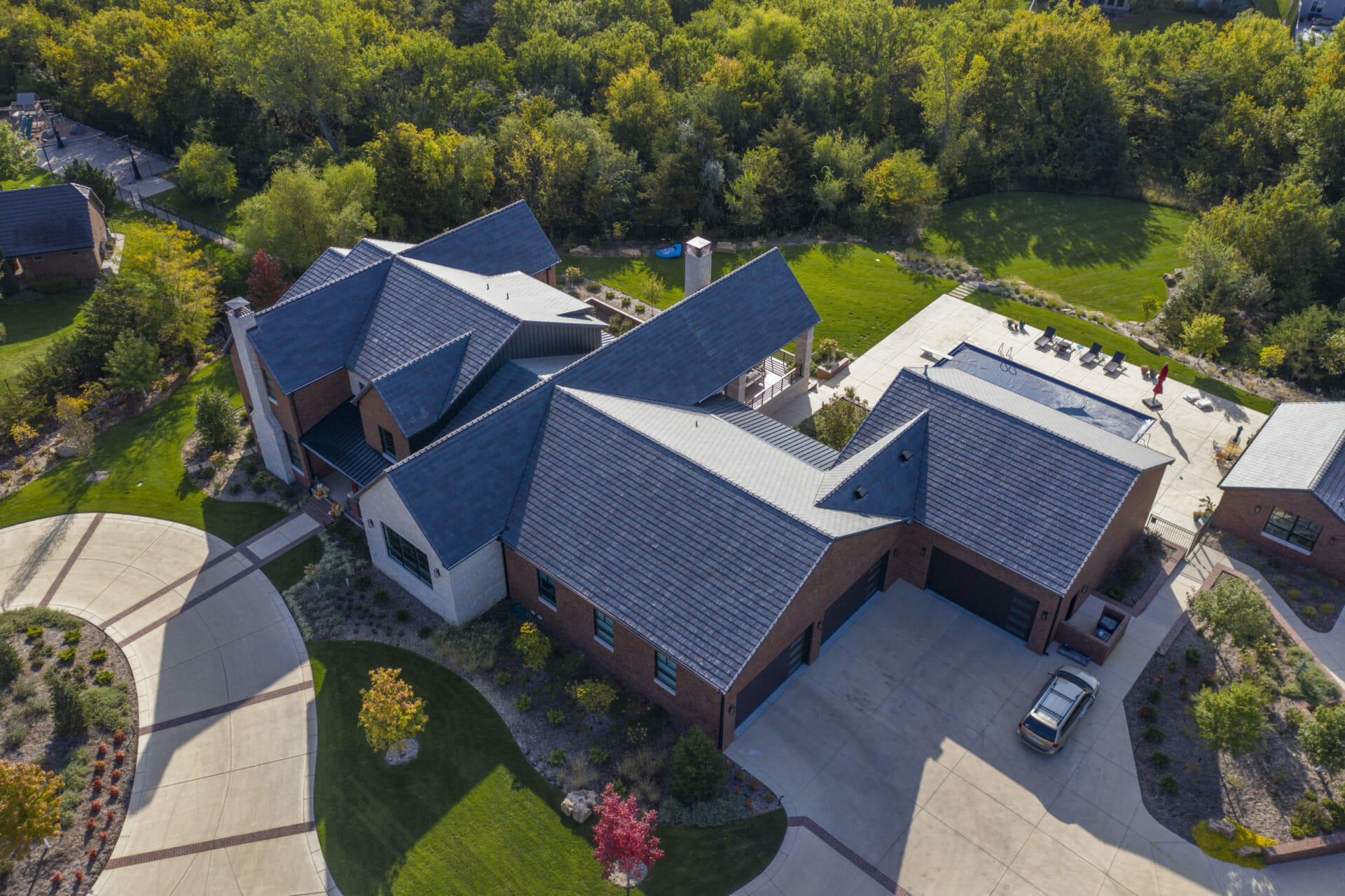
Completed roofing project

Alamo Roofing serves Lake County, Porter County & northern Illinois

Red Flag 10 — No Contractor License Number Provided

Any roofing contractor should readily provide their state license number for your independent verification. An Indiana contractor should provide their Indiana license. An Illinois contractor should provide their IDFPR roofing license number. If they hesitate or say licensing “isn’t required,” verify independently before signing anything.

What a Clean Estimate Looks Like

A legitimate roofing estimate specifies:

📞 Need Help?

Alamo Roofing provides free drone inspections across Northwest Indiana. Call (219) 248-2194 for a no-obligation assessment.

  • Exact shingle brand, product, and colo
  • Complete material list (underlayment, ice/water shield, starter, ridge cap, drip edge)
  • Tear-off and disposal
  • Permit fee and application
  • Decking repair allowance
  • Warranty terms in plain language
  • Payment schedule
  • Project start date and estimated completion
  • Contractor license numbe

Alamo Roofing’s estimates include all of this. We encourage you to bring any other estimate you’ve received and compare line by line.


Ready for Your Free Roof Inspection?

Call us at (219) 248-2194 or book online below.

Mon–Fri 9AM–5PM | Sat 9AM–3PM | 24/7 Emergency Storm Response

Schedule Your Free Roof Inspection

Get Your Free Roof Inspection

Free drone inspections across Lake County, Porter County & northern Illinois. Honest assessments — repair, replace, or no action needed.

(219) 248-2194
Book Online

Mon–Fri 9AM–5PM · Sat 9AM–3PM · 24/7 Emergency Storm Response

Schedule Your Free Roof Inspection

Ridge Vents vs. Box Vents vs. Power Vents — What’s Best for Your Indiana Home?

Most homeowners can identify their gutters and their shingles — but ask them about their attic ventilation system and you’ll usually get a blank look. Yet the ventilation system on your roof directly affects shingle lifespan, ice dam formation, and your GAF warranty validity.

Here’s a plain-language breakdown of every common ventilation type and what works best for Northwest Indiana and Illinois homes.

The Ventilation Principle — Why It Matters First

Your attic needs continuous airflow from low (intake) to high (exhaust). The system only works if both components are present and properly sized. Adding more exhaust without adequate intake doesn’t improve ventilation — it just creates a pressure imbalance that may pull conditioned air from your living space.

Every ventilation type discussion below assumes this principle is applied correctly. The best exhaust vent in the world is worthless without adequate soffit intake.

Professional roofing work

Professional inspection ensures no damage goes undetected

Continuous Ridge Vents — The Best Exhaust Option

A continuous ridge vent runs the entire length of your roof peak, providing a consistent, low-profile exhaust path for warm attic air. It’s protected by a cap shingle that conceals the vent while allowing airflow.

Advantages:
– Continuous exhaust along the entire ridge provides more even airflow than point-source exhaust vents
– Low profile — nearly invisible from the street
– No moving parts to fail
– Works passively — no electricity, no maintenance
– GAF’s preferred system when paired with proper soffit intake

Best for: Almost all residential applications in our climate. This is our standard recommendation on every project.

Paired with: Continuous or individual soffit vents providing intake at the eave line.

Box/Static Vents — Adequate but Not Ideal

Static box vents are individual exhaust vents installed in the field of your roof (not at the ridge). Common on homes from the 1960s-1990s.

Advantages:
– Less expensive to install than ridge vent
– Can be added to existing roofs without full replacement

💡 Pro Tip

Schedule a professional inspection within 30 days of any major storm. Early detection prevents costly repairs down the road.

Disadvantages:
– Point-source exhaust creates uneven airflow — areas far from a vent are poorly ventilated
– Each vent is a potential leak point
– Typically less total exhaust area than continuous ridge vent

Best for: Supplementing ventilation on homes with complex rooflines that don’t allow full-length ridge vent. Not ideal as the primary system.

Close-up of quality shingles

Quality materials and expert installation make the difference

Power/Electric Attic Ventilators — Often Counter-Productive

Power attic ventilators (PAVs) use an electric fan to exhaust attic air. Marketed as a premium solution, they’re often counterproductive in practice.

The problem: A powered fan creates negative pressure in the attic. If soffit intake is inadequate (as it commonly is), the fan pulls conditioned air from your living space through electrical penetrations, recessed lights, and attic access hatches — actually increasing HVAC costs while providing minimal net ventilation benefit.

Solar-powered versions have the same issue — the power source doesn’t fix the fundamental pressure imbalance problem.

When PAVs might be appropriate: Homes with unusually large attic spaces and genuinely adequate soffit intake. This is a small subset of applications.

Our honest take: We don’t recommend power attic ventilators as a primary or supplemental ventilation solution for most Northwest Indiana or Illinois homes.

Gable Vents — Supplemental Only

Gable vents (triangular vents at the peak of the gable ends) were the primary ventilation system for many mid-century homes. They provide cross-ventilation when wind is perpendicular to the gable but don’t create the continuous ridge-to-soffit airflow that modern standards require.

Gable vents don’t count toward ventilation calculations for purposes of GAF warranty compliance. They can supplement a ridge-vent/soffit system but don’t replace it.

Completed roofing project

Alamo Roofing serves Lake County, Porter County & northern Illinois

The Right Soffit Intake System

The exhaust system is only as good as the intake it’s paired with. Soffit intake options:

Continuous perforated soffit: Provides the most uniform intake — perforations across the entire soffit allow air to enter continuously along the entire eave line. The ideal pairing with continuous ridge vent.

📞 Need Help?

Alamo Roofing provides free drone inspections across Northwest Indiana. Call (219) 248-2194 for a no-obligation assessment.

Individual round or rectangular soffit vents: Individual vents spaced regularly along the soffit. Adequate if properly sized and spaced, but less uniform than continuous perforated.

The critical installation detail: Soffit vents must be kept clear of insulation. Ventilation baffles (channels that hold insulation back from the eave area) are required but frequently skipped — without them, insulation pushed to the eave blocks soffit vents completely.

What Alamo Does on Every Project

We assess your current ventilation before installation begins and correct any deficiencies as part of the project. This includes installing continuous ridge vent where appropriate, adding ventilation baffles in the attic where soffit vents are blocked, and recommending soffit upgrades where intake is inadequate.

This isn’t optional — GAF requires adequate ventilation for warranty validity. And inadequate ventilation shortens shingle life regardless of warranty. We won’t install a roof that will fail prematurely due to preventable ventilation issues.


Ready for Your Free Roof Inspection?

Call us at (219) 248-2194 or book online below.

Mon–Fri 9AM–5PM | Sat 9AM–3PM | 24/7 Emergency Storm Response

Schedule Your Free Roof Inspection


Get Your Free Roof Inspection

Free drone inspections across Lake County, Porter County & northern Illinois. Honest assessments — repair, replace, or no action needed.

(219) 248-2194
Book Online

Mon–Fri 9AM–5PM · Sat 9AM–3PM · 24/7 Emergency Storm Response

Schedule Your Free Roof Inspection
What to Expect During Roof Replacement — A Day-by-Day Guide for Homeowners

A roof replacement is one of the largest home improvement projects most homeowners undertake. Knowing what to expect reduces stress and helps you work effectively with your contractor.

Here’s exactly how the process works at Alamo Roofing.

Before the Project — Scheduling and Preparation

After signing your contract, we’ll schedule your installation. Most residential roof replacements are completed in a single day — larger or more complex roofs may take 2 days.

What to do before your installation day:
– Move vehicles out of the driveway and away from the work area
– Move patio furniture, grills, and outdoor items away from the home’s perimeter
– Plan to be home or have someone you trust available — the crew will need access to the attic for ventilation inspection
– Let your neighbors know — it will be noisy
– Cover any items in your attic that you don’t want dusty

Professional roofing work

Professional inspection ensures no damage goes undetected

Day of Installation — What’s Happening and When

Early morning (7-8 AM):
The crew arrives and sets up. This includes:
– Placing tarps along the perimeter of your home to catch falling debris and shingles
– Setting up the dump trailer or staging area for tear-off material
– Safety setup for steep pitches

Tear-off (8-10 AM typically):
The existing roofing system is removed. This is the loudest part of the process. We inspect the roof decking as we go — any soft, rotted, or damaged sections are marked and brought to your attention with photos before repair.

Decking repair (if needed):
Any damaged decking is replaced. We show you every replaced section and price it transparently at an agreed rate per sheet.

Underlayment and ice/water shield installation:
Ice and water shield is applied at all eaves and valleys. Synthetic underlayment is installed across the full deck surface.

Shingle installation:
Starter course, field shingles, ridge cap, and all flashings are installed. On a standard residential project, this takes most of the day.

Final installation and cleanup:
The crew completes all ridge cap, pipe boot, and flashing details. A magnetic roller sweeps the property for nails. All tear-off material is removed and your property is cleaned.

End of day inspection:
A supervisor walks the completed roof with you (or a designated representative) to review the finished work.

Residential shingle roofing

Quality materials and expert installation make the difference

What to Expect in Terms of Noise and Disruption

Be honest with yourself about your sensitivity to noise and schedule accordingly. Roof replacement is loud — nail guns, hammering, and material being dropped are continuous through most of the working day.

If you work from home, you may want to plan to work elsewhere that day. If you have pets sensitive to noise, consider arrangements for them.

💡 Pro Tip

Schedule a professional inspection within 30 days of any major storm. Early detection prevents costly repairs down the road.

Completed roofing project

Alamo Roofing serves Lake County, Porter County & northern Illinois

After Installation — What Happens Next

The next day:
Walk your property carefully and check the perimeter for any nails the magnetic roller may have missed, particularly in landscaping and grass areas.

Within 45 days:
Alamo Roofing registers your GAF warranty. You’ll receive warranty documentation directly from GAF within 60 days of installation. Keep this document — it’s transferable if you sell your home.

The GAF inspection (Golden Pledge projects):
If your project includes a GAF Golden Pledge warranty, a GAF Quality Assurance inspector will schedule a visit to conduct a 40-point inspection verifying the installation meets GAF standards. This is your independent quality check.

What If You Find an Issue After Installation?

Call us directly at (219) 248-2194. We take every post-installation concern seriously and respond quickly. Legitimate installation issues are covered under your workmanship warranty — and under our Golden Pledge warranty, they’re backed by GAF directly.

Questions about the process? Call (219) 248-2194 — we’re happy to walk you through it.


Ready for Your Free Roof Inspection?

Call us at (219) 248-2194 or book online below.

Mon–Fri 9AM–5PM | Sat 9AM–3PM | 24/7 Emergency Storm Response

Schedule Your Free Roof Inspection


Get Your Free Roof Inspection

Free drone inspections across Lake County, Porter County & northern Illinois. Honest assessments — repair, replace, or no action needed.

(219) 248-2194
Book Online

Mon–Fri 9AM–5PM · Sat 9AM–3PM · 24/7 Emergency Storm Response

Schedule Your Free Roof Inspection
Roof Moss, Algae, and Dark Stains — What They Are and How to Deal with Them

Dark streaks running down your shingles, green patches in shaded areas, or a generally discolored roof are common concerns for Northwest Indiana and northern Illinois homeowners — particularly on homes with significant tree cover or north-facing slopes that stay damp.

Here’s what’s actually happening, whether it’s causing damage, and what to do about it.

What Those Dark Streaks Are

The black or dark gray streaks running down your shingles are almost certainly algae — specifically Gloeocapsa magma, a cyanobacteria that feeds on the limestone filler in your asphalt shingles.

The algae itself isn’t immediately catastrophic, but:

  • It’s aesthetically unpleasant and can affect curb appeal and perceived home value
  • Algae growth accelerates moisture retention on the shingle surface
  • Extended moisture retention accelerates granule loss and UV degradation
  • Sustained algae can reduce shingle lifespan if left untreated over many years
Aerial view of residential roof

Professional inspection ensures no damage goes undetected

What Moss Is (Different From Algae)

Moss is more concerning than algae. Moss is a plant — it develops a root-like structure (rhizoids) that can physically lift shingle edges and work under the shingle surface. This creates entry points for water infiltration.

Moss thrives in shaded, moist conditions — north-facing slopes and areas under tree canopy are most vulnerable in our climate.

If you have significant moss accumulation, it’s worth addressing — both for appearance and because the physical lifting of shingles creates real leak risk over time.

Close-up of quality shingles

Quality materials and expert installation make the difference

Safe Treatment Options

For algae staining:
A diluted bleach solution (approximately 1 part bleach to 3 parts water with a surfactant) applied to the roof surface and allowed to sit before rinsing addresses algae effectively. Apply from a garden sprayer; rinse thoroughly.

Important warnings:
– Never pressure wash asphalt shingles — high pressure strips granules and dramatically shortens shingle life
– Protect landscaping below with tarps before applying any bleach solution
– Apply in the evening to prevent rapid evaporation
– Work safely — don’t climb on a wet roof

💡 Pro Tip

Schedule a professional inspection within 30 days of any major storm. Early detection prevents costly repairs down the road.

For moss:
Treatment is similar but more intensive, and physical removal may be needed before chemical treatment. Moss should be loosened and removed carefully (with a soft brush, not a stiff scraper) before treatment.

Professional roof replacement

Alamo Roofing serves Lake County, Porter County & northern Illinois

Prevention Options

Zinc strips: Zinc metal strips installed at the ridge line release zinc carbonate when wet — this runoff inhibits algae and moss growth on the roof below. Low-maintenance, lasts 5-10+ years. A cost-effective prevention measure.

Copper strips: Similar principle to zinc but more effective. Copper’s antimicrobial properties are stronger. Used on premium installations.

Algae-resistant shingles: GAF’s Timberline HD with StainGuard Plus protection incorporates zinc and copper granules into the shingle surface that inhibit algae growth. When replacing your roof, choosing StainGuard Plus shingles eliminates the algae concern for the life of the shingle.

Tree trimming: Reducing canopy over shaded roof sections reduces moisture retention and sunlight restriction — addressing the root cause rather than treating the symptom.

When Algae or Moss Indicates a Bigger Problem

If algae and moss are growing aggressively on a roof less than 10 years old, this may indicate:

  • Inadequate ventilation causing chronic moisture retention on the deck
  • Deficient granule coverage on the shingles
  • Inappropriate shingles for a heavily shaded application

Aggressive early growth on a newer roof warrants a professional assessment to identify root causes.


Ready for Your Free Roof Inspection?

Call us at (219) 248-2194 or book online below.

Mon–Fri 9AM–5PM | Sat 9AM–3PM | 24/7 Emergency Storm Response

Schedule Your Free Roof Inspection


Get Your Free Roof Inspection

Free drone inspections across Lake County, Porter County & northern Illinois. Honest assessments — repair, replace, or no action needed.

(219) 248-2194
Book Online

Mon–Fri 9AM–5PM · Sat 9AM–3PM · 24/7 Emergency Storm Response

Schedule Your Free Roof Inspection

Annual Roof Maintenance Programs — Are They Worth It for Indiana Homeowners?

Roofing maintenance programs have become more common in residential markets over the past decade — contractors offering annual or bi-annual inspection and minor repair services for a fixed annual fee. The question every homeowner should ask: is it actually worth it?

Here’s an honest assessment.

What a Residential Maintenance Program Typically Includes

A standard annual residential roof maintenance program includes:

  • One or two professional roof inspections per year (spring and fall)
  • Minor repairs included in the program fee (pipe boot resealing, flashing caulk refresh, minor shingle re-nailing)
  • Priority scheduling for emergency service
  • Written inspection report after each visit
  • Discount on larger repair or replacement work

Program fees typically run $200-$500 per year for a standard residential home in our market.

Roofing project by Alamo Roofing

Professional inspection ensures no damage goes undetected

The Case FOR a Maintenance Program

Catch problems early: A $150 flashing repair caught in October prevents a $2,000 water damage repair in January. Annual inspection creates the opportunity to catch the small problem before it becomes large.

Maintain warranty validity: Some manufacturer warranties require evidence of regular maintenance. Annual inspection documentation creates that record.

Pre-storm documentation: Annual inspection creates a documented baseline condition for your roof. If a storm causes damage, having documented pre-storm condition strengthens your insurance claim.

Priority service commitment: After a major storm event, roofing companies are swamped. A maintenance agreement typically includes priority scheduling — meaning you get service faster when demand is highest.

Peace of mind: Knowing your roof has been professionally inspected twice a year removes a category of home maintenance anxiety.

Completed roofing project

Alamo Roofing serves Lake County, Porter County & northern Illinois

Close-up of quality shingles

Quality materials and expert installation make the difference

The Case AGAINST a Maintenance Program

If your roof is new or in excellent condition: An annual inspection is valuable; a full maintenance program may be over-insurance for the current situation.

If you’re handy and attentive: Homeowners who walk their property after storms, clear gutters regularly, and know what to look for may catch most issues themselves.

💡 Pro Tip

Schedule a professional inspection within 30 days of any major storm. Early detection prevents costly repairs down the road.

If the program doesn’t include real repairs: Programs that include inspection only (no included minor repairs) provide less value than those including actual maintenance work.

Our Honest Assessment

For most homeowners in Lake County, Porter County, and northern Illinois, a bi-annual inspection is valuable — worth scheduling regardless of whether you pay for a formal program. The question is whether the annual program fee is worth it given what’s included.

A maintenance program makes most sense for:
– Homeowners over 10 years into a roof’s life (where failure risk is increasing)
– Homes with significant tree cover or other risk factors
– Homeowners who don’t feel comfortable self-assessing
– Investment property owners who aren’t on-site regularly

Free alternative: Alamo provides free annual drone inspections to customers of ours who’ve had roofing or siding work done. If you’ve worked with us, call at any time to schedule a free inspection — no maintenance program required.

For everyone else: Call (219) 248-2194 to schedule a free inspection. If we find issues, we’ll provide an honest estimate. If everything looks good, we’ll tell you that too.


Ready for Your Free Roof Inspection?

Call us at (219) 248-2194 or book online below.

Mon–Fri 9AM–5PM | Sat 9AM–3PM | 24/7 Emergency Storm Response

Schedule Your Free Roof Inspection


Get Your Free Roof Inspection

Free drone inspections across Lake County, Porter County & northern Illinois. Honest assessments — repair, replace, or no action needed.

(219) 248-2194
Book Online

Mon–Fri 9AM–5PM · Sat 9AM–3PM · 24/7 Emergency Storm Response

Schedule Your Free Roof Inspection
What Happens During a Professional Roof Inspection — And Why Drone Inspections Are Better

What Happens During a Professional Roof Inspection — And Why Drone Inspections Are Better

Most homeowners only think about their roof when there’s a problem. By then, a small issue has often become an expensive one. Annual professional inspections change this equation — catching problems early when repair costs are low and preventing insurance claim windows from closing.

What a Traditional Roof Inspection Covers

A professional on-roof inspection covers:
– All visible shingle surfaces for lifting, curling, cracking, or granule loss
– All valleys for debris accumulation and flashing integrity
– Ridge cap condition and wind resistance
– All pipe boots and penetration flashings
– Chimney flashing and counter flashing
– Gutter attachment and condition
– Fascia and soffit condition
– Attic access for interior review (ventilation, insulation level, moisture)

A thorough traditional inspection takes 45-90 minutes for a standard residential roof.

Why Drone Inspections Are Better for Northwest Indiana Homes

Alamo Roofing uses high-resolution drone inspection as our standard approach. Here’s why it’s superior:

Complete coverage: A drone captures every square inch of your roof surface, including areas difficult or impossible to safely access on steep-pitch historic homes in Crown Point or Hammond.

Better documentation: Drone footage creates a visual record of every impact, every area of granule loss, every flashing gap. This documentation is critical for insurance claims — far more comprehensive than photos from ground level or even from a walking inspection.

Safety: No ladders against your fascia, no boots on your landscaping, no risk to our crew on a wet or steep surface.

Pre and post-storm documentation: Drone footage before a storm establishes baseline condition. Footage after establishes claim-able damage. This before/after documentation is extraordinarily powerful in insurance negotiations.

Thermal imaging (available): Infrared drone inspection can detect moisture trapped in insulation and decking that isn’t yet visible — catching water infiltration before it becomes structural damage.

What Happens After the Inspection

After a Alamo drone inspection, you receive:

Written inspection report with photos documenting all findings — organized by category (shingle condition, flashing, gutters, etc.)

Honest assessment of what we found: no action needed, repair recommended, or replacement warranted — with reasoning for each recommendation

Insurance damage documentation if the inspection reveals storm-related damage — formatted for submission to your insurance company

Written estimate if repair or replacement is recommended, with all options clearly priced

How Often Should You Get Inspected?

Annually: The standard recommendation for any roof 10+ years old. Spring inspections catch winter damage; fall inspections prepare you for winter.

After any significant storm: Any hail event of 3/4″ or larger, any wind event producing 60+ mph gusts, or any storm that causes visible damage to trees, gutters, or neighboring homes.

Before buying a home: A professional roof inspection before closing can identify issues that affect your offer price or require seller repair.

Before selling a home: Knowing your roof’s condition before listing prevents negotiation surprises and allows time to address issues or make an informed disclosure.

Alamo roof inspections are always free. Call (219) 224-2636 to schedule.


About Alamo Roofing Contractors

Alamo Roofing Contractors is a GAF Master Elite certified roofing contractor serving Northwest Indiana and northern Illinois since 2017. Based in Portage, Indiana, we serve Lake County, Porter County, LaPorte County, Cook County, Will County, and DuPage County.

[Schedule Your Free Estimate] → https://api.leadconnectorhq.com/widget/booking/DKc0HhICa64zXLn8XJtX
[Call (219) 224-2636] → tel:+12192242636

Mon–Fri 9AM–5PM | Sat 9AM–3PM | 24/7 Emergency Storm Response

(219) 248-2194