
Most homeowners can identify their gutters and their shingles — but ask them about their attic ventilation system and you’ll usually get a blank look. Yet the ventilation system on your roof directly affects shingle lifespan, ice dam formation, and your GAF warranty validity.
Here’s a plain-language breakdown of every common ventilation type and what works best for Northwest Indiana and Illinois homes.
The Ventilation Principle — Why It Matters First
Your attic needs continuous airflow from low (intake) to high (exhaust). The system only works if both components are present and properly sized. Adding more exhaust without adequate intake doesn’t improve ventilation — it just creates a pressure imbalance that may pull conditioned air from your living space.
Every ventilation type discussion below assumes this principle is applied correctly. The best exhaust vent in the world is worthless without adequate soffit intake.
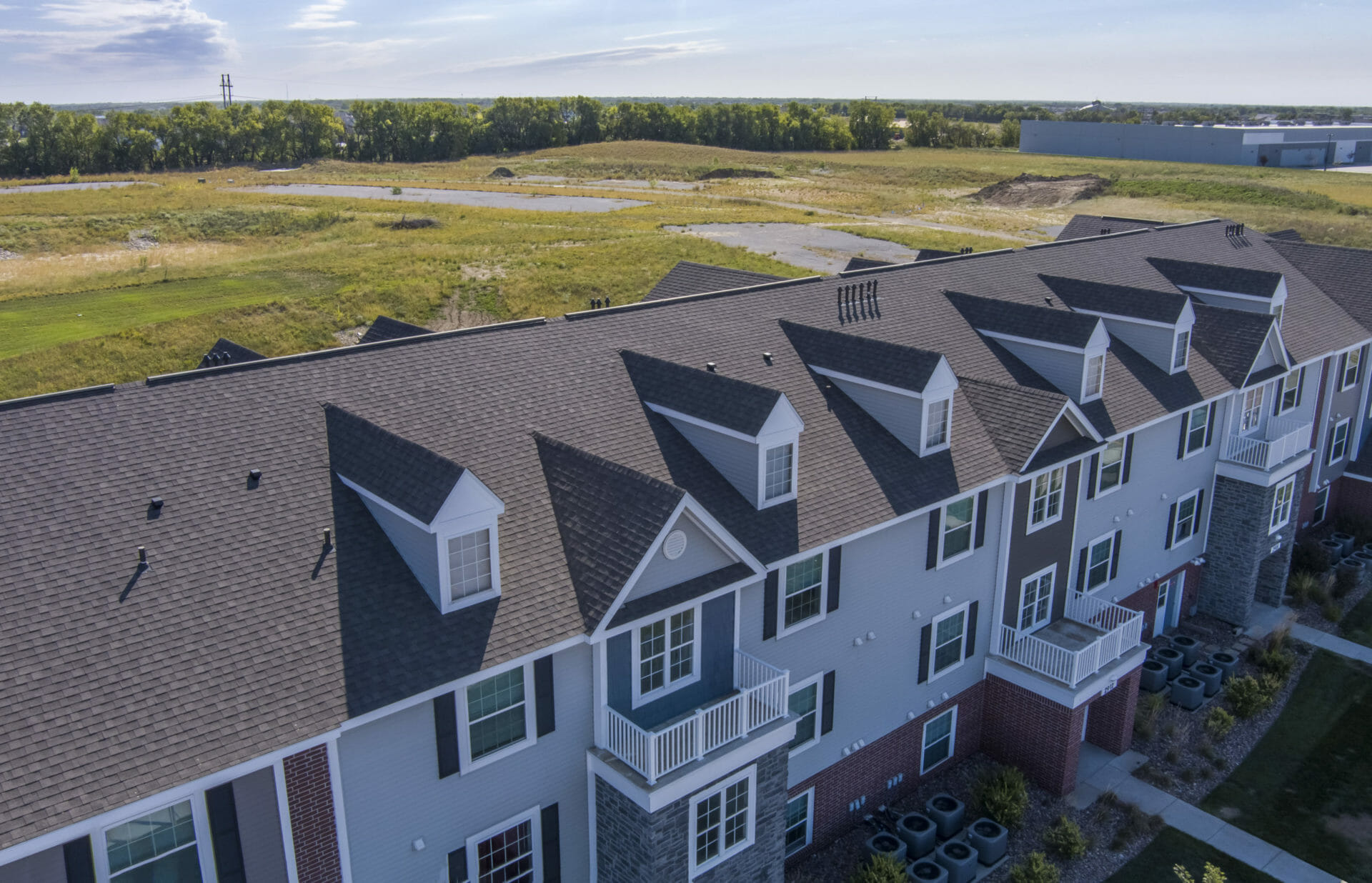
Professional inspection ensures no damage goes undetected
Continuous Ridge Vents — The Best Exhaust Option
A continuous ridge vent runs the entire length of your roof peak, providing a consistent, low-profile exhaust path for warm attic air. It’s protected by a cap shingle that conceals the vent while allowing airflow.
Advantages:
– Continuous exhaust along the entire ridge provides more even airflow than point-source exhaust vents
– Low profile — nearly invisible from the street
– No moving parts to fail
– Works passively — no electricity, no maintenance
– GAF’s preferred system when paired with proper soffit intake
Best for: Almost all residential applications in our climate. This is our standard recommendation on every project.
Paired with: Continuous or individual soffit vents providing intake at the eave line.
Box/Static Vents — Adequate but Not Ideal
Static box vents are individual exhaust vents installed in the field of your roof (not at the ridge). Common on homes from the 1960s-1990s.
Advantages:
– Less expensive to install than ridge vent
– Can be added to existing roofs without full replacement
💡 Pro Tip
Schedule a professional inspection within 30 days of any major storm. Early detection prevents costly repairs down the road.
Disadvantages:
– Point-source exhaust creates uneven airflow — areas far from a vent are poorly ventilated
– Each vent is a potential leak point
– Typically less total exhaust area than continuous ridge vent
Best for: Supplementing ventilation on homes with complex rooflines that don’t allow full-length ridge vent. Not ideal as the primary system.

Quality materials and expert installation make the difference
Power/Electric Attic Ventilators — Often Counter-Productive
Power attic ventilators (PAVs) use an electric fan to exhaust attic air. Marketed as a premium solution, they’re often counterproductive in practice.
The problem: A powered fan creates negative pressure in the attic. If soffit intake is inadequate (as it commonly is), the fan pulls conditioned air from your living space through electrical penetrations, recessed lights, and attic access hatches — actually increasing HVAC costs while providing minimal net ventilation benefit.
Solar-powered versions have the same issue — the power source doesn’t fix the fundamental pressure imbalance problem.
When PAVs might be appropriate: Homes with unusually large attic spaces and genuinely adequate soffit intake. This is a small subset of applications.
Our honest take: We don’t recommend power attic ventilators as a primary or supplemental ventilation solution for most Northwest Indiana or Illinois homes.
Gable Vents — Supplemental Only
Gable vents (triangular vents at the peak of the gable ends) were the primary ventilation system for many mid-century homes. They provide cross-ventilation when wind is perpendicular to the gable but don’t create the continuous ridge-to-soffit airflow that modern standards require.
Gable vents don’t count toward ventilation calculations for purposes of GAF warranty compliance. They can supplement a ridge-vent/soffit system but don’t replace it.

Alamo Roofing serves Lake County, Porter County & northern Illinois
The Right Soffit Intake System
The exhaust system is only as good as the intake it’s paired with. Soffit intake options:
Continuous perforated soffit: Provides the most uniform intake — perforations across the entire soffit allow air to enter continuously along the entire eave line. The ideal pairing with continuous ridge vent.
📞 Need Help?
Alamo Roofing provides free drone inspections across Northwest Indiana. Call (219) 248-2194 for a no-obligation assessment.
Individual round or rectangular soffit vents: Individual vents spaced regularly along the soffit. Adequate if properly sized and spaced, but less uniform than continuous perforated.
The critical installation detail: Soffit vents must be kept clear of insulation. Ventilation baffles (channels that hold insulation back from the eave area) are required but frequently skipped — without them, insulation pushed to the eave blocks soffit vents completely.
What Alamo Does on Every Project
We assess your current ventilation before installation begins and correct any deficiencies as part of the project. This includes installing continuous ridge vent where appropriate, adding ventilation baffles in the attic where soffit vents are blocked, and recommending soffit upgrades where intake is inadequate.
This isn’t optional — GAF requires adequate ventilation for warranty validity. And inadequate ventilation shortens shingle life regardless of warranty. We won’t install a roof that will fail prematurely due to preventable ventilation issues.
Ready for Your Free Roof Inspection?
Call us at (219) 248-2194 or book online below.
Mon–Fri 9AM–5PM | Sat 9AM–3PM | 24/7 Emergency Storm Response
Schedule Your Free Roof Inspection
Get Your Free Roof Inspection
Free drone inspections across Lake County, Porter County & northern Illinois. Honest assessments — repair, replace, or no action needed.
Mon–Fri 9AM–5PM · Sat 9AM–3PM · 24/7 Emergency Storm Response
Schedule Your Free Roof Inspection

