by Andy Huffman | May 28, 2026 | Commercial Roofing
If you own or manage commercial property in Lake County or northern Illinois, you’ve likely received recommendations for annual or bi-annual roof inspections. Understanding what a thorough commercial roof inspection actually covers helps you evaluate whether you’re getting value from your current provider — and what to expect if you’re scheduling your first inspection.
Why Commercial Roof Inspections Differ from Residential
Commercial flat and low-slope roofs fail differently than residential sloped roofs. The primary risks are:
- slope roofs fail differently than residential sloped roofs. The primary risks are:
- Seam failures allowing water infiltration below the membrane
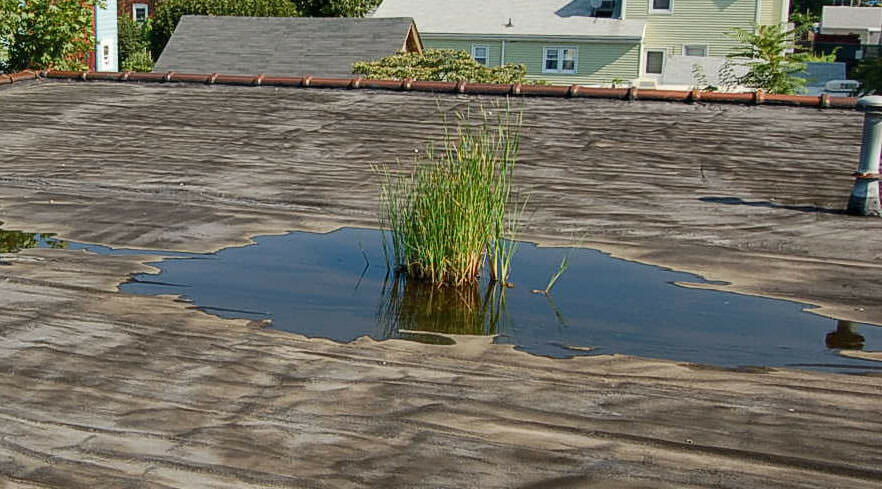
- Ponding water accelerating membrane deterioration
- Penetration flashing failures around HVAC equipment, pipes, and curbs
- Drain obstruction causing water backup and excessive roof load
These failure modes require different inspection techniques than walking a residential shingle roof and looking for lifted tabs.
Alamo Roofing serves Lake County, Porter County & northern Illinois
Quality materials and expert installation make the difference
Professional inspection ensures no damage goes undetected
The 10 Components of a Thorough Commercial Inspection
1. Membrane surface condition assessment
The inspector walks the entire roof surface documenting:
– Surface cracking, alligatoring, or chalking
– Blistering or bubbling (indicating trapped moisture or gas below the membrane)
– Punctures or cuts
– Surface erosion or wear patterns
– UV degradation indicators
2. Seam integrity testing
All field seams and perimeter seams are probed with a hand tool to check for separation, lifting, or weak bonds. This is the most critical component — seam failures are the #1 cause of commercial roof leaks.
On heat-welded TPO/PVC seams, inspectors check for proper weld width and bond integrity. On EPDM adhesive seams, they check for delamination and adhesive failure.
3. Penetration flashing inspection
Every roof penetration — HVAC curbs, pipe stacks, electrical conduits, drains, skylights — is inspected for:
– Flashing separation from curb or membrane
– Cracks or tears in flashing material
– Failed caulking at termination points
– Standing water around drain flashings
4. Edge and perimeter condition
Roof edges and termination bars are inspected for:
– Membrane lifting at perimeter
– Metal edge condition (rust, separation)
– Counter-flashing at parapet walls
– Coping cap condition on parapet walls
5. Drain inspection and flow testing
All interior drains and perimeter scuppers are:
– Cleared of debris
– Inspected for proper membrane connection
– Checked for adequate flow capacity
– Assessed for proper slope toward drain
If drains have standing water around them, the cause (obstruction vs. inadequate slope) is documented.
6. Ponding water assessment
Any areas of consistent ponding (water remaining 48+ hours after rain) are documented with dimensions. Ponding is categorized by severity and urgency.
7. Roof penetration equipment assessment
HVAC units, satellite mounts, and other roof-mounted equipment are checked for:
– Proper mounting and flashing
– Vibration damage to surrounding membrane
– Condensate drain condition
8. Parapet wall inspection
Parapet walls and their roofing connections are inspected for:
– Cracks in masonry
– Failed mortar joints
– Deteriorated counter-flashing
– Water infiltration signs on interior face
9. Moisture testing (when indicated)
When visual inspection suggests potential moisture below the membrane, non-destructive testing options include:
– Core sampling at suspect locations
– Infrared thermography (best performed in early morning or evening when temperature differential is highest)
10. Interior correlation
Where possible, interior ceiling inspection is correlated with exterior findings — water staining patterns help identify leak sources and track pathways.
What the Report Should Include
A professional commercial inspection report delivers:
- Photographs of every finding, with GPS location tags for larger roofs
- Condition rating (good/fair/poor) for each component
- Priority classification for findings (immediate/near-term/monitor)
- Estimated remaining service life
- Recommended action and estimated cost for each finding
- Overall roof condition summary
Alamo provides written commercial inspection reports for all Lake County and northern Illinois commercial properties. Call (219) 248-2194 to schedule.
Ready for Your Free Roof Inspection?
Call us at (219) 248-2194 or book online below.
Mon–Fri 9AM–5PM | Sat 9AM–3PM | 24/7 Emergency Storm Response
Schedule Your Free Roof Inspection
Get Your Free Roof Inspection
Free drone inspections across Lake County, Porter County & northern Illinois. Honest assessments — repair, replace, or no action needed.
(219) 248-2194
Book Online
Mon–Fri 9AM–5PM · Sat 9AM–3PM · 24/7 Emergency Storm Response
Schedule Your Free Roof Inspection
by Andy Huffman | May 28, 2026 | Commercial Roofing
What Does a Commercial Roof Inspection Cover? A Property Owner’s Guide
If you own or manage commercial property in Lake County or northern Illinois, you’ve likely received recommendations for annual or bi-annual roof inspections. Understanding what a thorough commercial roof inspection actually covers helps you evaluate whether you’re getting value from your current provider — and what to expect if you’re scheduling your first inspection.
Why Commercial Roof Inspections Differ from Residential
Commercial flat and low-slope roofs fail differently than residential sloped roofs. The primary risks are:
– Seam failures allowing water infiltration below the membrane
– Ponding water accelerating membrane deterioration
– Penetration flashing failures around HVAC equipment, pipes, and curbs
– Drain obstruction causing water backup and excessive roof load
These failure modes require different inspection techniques than walking a residential shingle roof and looking for lifted tabs.
The 10 Components of a Thorough Commercial Inspection
1. Membrane surface condition assessment
The inspector walks the entire roof surface documenting:
– Surface cracking, alligatoring, or chalking
– Blistering or bubbling (indicating trapped moisture or gas below the membrane)
– Punctures or cuts
– Surface erosion or wear patterns
– UV degradation indicators
2. Seam integrity testing
All field seams and perimeter seams are probed with a hand tool to check for separation, lifting, or weak bonds. This is the most critical component — seam failures are the #1 cause of commercial roof leaks.
On heat-welded TPO/PVC seams, inspectors check for proper weld width and bond integrity. On EPDM adhesive seams, they check for delamination and adhesive failure.
3. Penetration flashing inspection
Every roof penetration — HVAC curbs, pipe stacks, electrical conduits, drains, skylights — is inspected for:
– Flashing separation from curb or membrane
– Cracks or tears in flashing material
– Failed caulking at termination points
– Standing water around drain flashings
4. Edge and perimeter condition
Roof edges and termination bars are inspected for:
– Membrane lifting at perimeter
– Metal edge condition (rust, separation)
– Counter-flashing at parapet walls
– Coping cap condition on parapet walls
5. Drain inspection and flow testing
All interior drains and perimeter scuppers are:
– Cleared of debris
– Inspected for proper membrane connection
– Checked for adequate flow capacity
– Assessed for proper slope toward drain
If drains have standing water around them, the cause (obstruction vs. inadequate slope) is documented.
6. Ponding water assessment
Any areas of consistent ponding (water remaining 48+ hours after rain) are documented with dimensions. Ponding is categorized by severity and urgency.
7. Roof penetration equipment assessment
HVAC units, satellite mounts, and other roof-mounted equipment are checked for:
– Proper mounting and flashing
– Vibration damage to surrounding membrane
– Condensate drain condition
8. Parapet wall inspection
Parapet walls and their roofing connections are inspected for:
– Cracks in masonry
– Failed mortar joints
– Deteriorated counter-flashing
– Water infiltration signs on interior face
9. Moisture testing (when indicated)
When visual inspection suggests potential moisture below the membrane, non-destructive testing options include:
– Core sampling at suspect locations
– Infrared thermography (best performed in early morning or evening when temperature differential is highest)
10. Interior correlation
Where possible, interior ceiling inspection is correlated with exterior findings — water staining patterns help identify leak sources and track pathways.
What the Report Should Include
A professional commercial inspection report delivers:
– Photographs of every finding, with GPS location tags for larger roofs
– Condition rating (good/fair/poor) for each component
– Priority classification for findings (immediate/near-term/monitor)
– Estimated remaining service life
– Recommended action and estimated cost for each finding
– Overall roof condition summary
Alamo provides written commercial inspection reports for all Lake County and northern Illinois commercial properties. Call (219) 224-2636 to schedule.
About Alamo Roofing Contractors
Alamo Roofing Contractors is a GAF Master Elite certified roofing contractor serving Northwest Indiana and northern Illinois since 2017. Based in Portage, Indiana at 6064 Lute Rd, we serve Lake County, Porter County, LaPorte County, Cook County, Will County, and DuPage County with residential and commercial roofing, siding, gutters, and exterior services.
[Schedule Your Free Estimate] → https://api.leadconnectorhq.com/widget/booking/DKc0HhICa64zXLn8XJtX
[Call (219) 224-2636] → tel:+12192242636
Mon–Fri 9AM–5PM | Sat 9AM–3PM | 24/7 Emergency Storm Response
by Andy Huffman | May 28, 2026 | Commercial Roofing
What Does a Commercial Roof Inspection Cover? A Property Owner’s Guide
If you own or manage commercial property in Lake County or northern Illinois, you’ve likely received recommendations for annual or bi-annual roof inspections. Understanding what a thorough commercial roof inspection actually covers helps you evaluate whether you’re getting value from your current provider — and what to expect if you’re scheduling your first inspection.
Why Commercial Roof Inspections Differ from Residential
Commercial flat and low-slope roofs fail differently than residential sloped roofs. The primary risks are:
– Seam failures allowing water infiltration below the membrane
– Ponding water accelerating membrane deterioration
– Penetration flashing failures around HVAC equipment, pipes, and curbs
– Drain obstruction causing water backup and excessive roof load
These failure modes require different inspection techniques than walking a residential shingle roof and looking for lifted tabs.
The 10 Components of a Thorough Commercial Inspection
1. Membrane surface condition assessment
The inspector walks the entire roof surface documenting:
– Surface cracking, alligatoring, or chalking
– Blistering or bubbling (indicating trapped moisture or gas below the membrane)
– Punctures or cuts
– Surface erosion or wear patterns
– UV degradation indicators
2. Seam integrity testing
All field seams and perimeter seams are probed with a hand tool to check for separation, lifting, or weak bonds. This is the most critical component — seam failures are the #1 cause of commercial roof leaks.
On heat-welded TPO/PVC seams, inspectors check for proper weld width and bond integrity. On EPDM adhesive seams, they check for delamination and adhesive failure.
3. Penetration flashing inspection
Every roof penetration — HVAC curbs, pipe stacks, electrical conduits, drains, skylights — is inspected for:
– Flashing separation from curb or membrane
– Cracks or tears in flashing material
– Failed caulking at termination points
– Standing water around drain flashings
4. Edge and perimeter condition
Roof edges and termination bars are inspected for:
– Membrane lifting at perimeter
– Metal edge condition (rust, separation)
– Counter-flashing at parapet walls
– Coping cap condition on parapet walls
5. Drain inspection and flow testing
All interior drains and perimeter scuppers are:
– Cleared of debris
– Inspected for proper membrane connection
– Checked for adequate flow capacity
– Assessed for proper slope toward drain
If drains have standing water around them, the cause (obstruction vs. inadequate slope) is documented.
6. Ponding water assessment
Any areas of consistent ponding (water remaining 48+ hours after rain) are documented with dimensions. Ponding is categorized by severity and urgency.
7. Roof penetration equipment assessment
HVAC units, satellite mounts, and other roof-mounted equipment are checked for:
– Proper mounting and flashing
– Vibration damage to surrounding membrane
– Condensate drain condition
8. Parapet wall inspection
Parapet walls and their roofing connections are inspected for:
– Cracks in masonry
– Failed mortar joints
– Deteriorated counter-flashing
– Water infiltration signs on interior face
9. Moisture testing (when indicated)
When visual inspection suggests potential moisture below the membrane, non-destructive testing options include:
– Core sampling at suspect locations
– Infrared thermography (best performed in early morning or evening when temperature differential is highest)
10. Interior correlation
Where possible, interior ceiling inspection is correlated with exterior findings — water staining patterns help identify leak sources and track pathways.
What the Report Should Include
A professional commercial inspection report delivers:
– Photographs of every finding, with GPS location tags for larger roofs
– Condition rating (good/fair/poor) for each component
– Priority classification for findings (immediate/near-term/monitor)
– Estimated remaining service life
– Recommended action and estimated cost for each finding
– Overall roof condition summary
Alamo provides written commercial inspection reports for all Lake County and northern Illinois commercial properties. Call (219) 224-2636 to schedule.
About Alamo Roofing Contractors
Alamo Roofing Contractors is a GAF Master Elite certified roofing contractor serving Northwest Indiana and northern Illinois since 2017. Based in Portage, Indiana at 6064 Lute Rd, we serve Lake County, Porter County, LaPorte County, Cook County, Will County, and DuPage County with residential and commercial roofing, siding, gutters, and exterior services.
[Schedule Your Free Estimate] → https://api.leadconnectorhq.com/widget/booking/DKc0HhICa64zXLn8XJtX
[Call (219) 224-2636] → tel:+12192242636
Mon–Fri 9AM–5PM | Sat 9AM–3PM | 24/7 Emergency Storm Response
by Andy Huffman | May 25, 2026 | Commercial Roofing
If you own or manage commercial property in Lake County Indiana or Cook/Will County Illinois, commercial roof coatings may be the most cost-effective investment you make in your building this year — or they may be a waste of money depending on your roof’s condition.
Here’s the honest breakdown.
What Commercial Roof Coatings Are
A commercial roof coating is a liquid-applied material that cures to form a seamless, waterproof membrane over your existing commercial roof. The most common types for our region:
Silicone coatings: Best overall performance in our climate — excellent UV resistance, remains flexible through freeze-thaw cycles, and tolerates ponding water without degrading. The premium option.
Acrylic coatings: Less expensive than silicone, excellent reflectivity (energy savings), but less tolerant of standing water and less durable in extreme cold. Better suited for well-drained roofs.
Professional inspection ensures no damage goes undetected
When Coating Makes Sense
A commercial roof coating is potentially the right solution when:
- Your roof is structurally sound with no saturated insulation
- The membrane is intact but showing surface weathering
- You have 5-10 years of remaining roof life that you want to extend
- You want to restore reflectivity for energy savings
- Your roof passes a core sample test for moisture content
When Coating Does NOT Make Sense
Coating is the wrong solution when:
- Your insulation is saturated (water under the membrane) — coating traps moisture and accelerates deterioration
- The membrane has significant seam failures or structural issues
- Your roof has less than 3-4 years of structural life remaining
- Drainage is fundamentally inadequate — ponding water exceeds what silicone can manage
This is why a thorough inspection — including moisture testing — is essential before recommending coating. Alamo inspects every potential coating candidate before recommending the system.
💡 Pro Tip
Schedule a professional inspection within 30 days of any major storm. Early detection prevents costly repairs down the road.
Quality materials and expert installation make the difference
The Cost Comparison
For a 10,000 square foot commercial roof in Lake County or Cook County:
Coating: $2-$6 per square foot = $20,000–$60,000
Full replacement: $8-$15 per square foot = $80,000–$150,000
When coating is appropriate, the savings are substantial. A silicone coating system with a 10-year manufacturer warranty on a qualifying roof represents $60,000-$90,000 in deferred replacement cost.
Alamo Roofing serves Lake County, Porter County & northern Illinois
Energy Savings from Reflective Coatings
White silicone and acrylic coatings reflect 75-85% of solar energy. For a 10,000 sq ft commercial building in Lake County or Cook County, a quality reflective coating can reduce cooling costs by $2,000-$6,000 per year.
In our climate — where cooling costs are real but less extreme than in southern markets — this benefit takes longer to pay back than in Texas or Florida. But it’s a real and ongoing benefit.
📞 Need Help?
Alamo Roofing provides free drone inspections across Northwest Indiana. Call (219) 248-2194 for a no-obligation assessment.
The Alamo Process for Commercial Coating Candidates
- Free commercial roof inspection — we assess membrane condition, drainage, and structural integrity
- Moisture testing — core samples or infrared scanning to check for saturated insulation
- Honest recommendation — coating if appropriate, repair or replacement if it isn’t
- System selection — silicone vs. acrylic based on your specific roof profile and drainage
- Warranted installation — manufacturer warranties available on qualifying systems
We do not recommend coating as a solution if the inspection reveals conditions that would result in poor performance or early failure. Our reputation depends on recommending the right solution.
Ready for Your Free Roof Inspection?
Call us at (219) 248-2194 or book online below.
Mon–Fri 9AM–5PM | Sat 9AM–3PM | 24/7 Emergency Storm Response
Schedule Your Free Roof Inspection
Get Your Free Roof Inspection
Free drone inspections across Lake County, Porter County & northern Illinois. Honest assessments — repair, replace, or no action needed.
(219) 248-2194
Book Online
Mon–Fri 9AM–5PM · Sat 9AM–3PM · 24/7 Emergency Storm Response
Schedule Your Free Roof Inspection
by Andy Huffman | May 25, 2026 | Commercial Roofing
Commercial Roof Coatings — Can They Save Your Illinois or Indiana Business Thousands?
If you own or manage commercial property in Lake County Indiana or Cook/Will County Illinois, commercial roof coatings may be the most cost-effective investment you make in your building this year — or they may be a waste of money depending on your roof’s condition.
Here’s the honest breakdown.
What Commercial Roof Coatings Are
A commercial roof coating is a liquid-applied material that cures to form a seamless, waterproof membrane over your existing commercial roof. The most common types for our region:
Silicone coatings: Best overall performance in our climate — excellent UV resistance, remains flexible through freeze-thaw cycles, and tolerates ponding water without degrading. The premium option.
Acrylic coatings: Less expensive than silicone, excellent reflectivity (energy savings), but less tolerant of standing water and less durable in extreme cold. Better suited for well-drained roofs.
When Coating Makes Sense
A commercial roof coating is potentially the right solution when:
– Your roof is structurally sound with no saturated insulation
– The membrane is intact but showing surface weathering
– You have 5-10 years of remaining roof life that you want to extend
– You want to restore reflectivity for energy savings
– Your roof passes a core sample test for moisture content
When Coating Does NOT Make Sense
Coating is the wrong solution when:
– Your insulation is saturated (water under the membrane) — coating traps moisture and accelerates deterioration
– The membrane has significant seam failures or structural issues
– Your roof has less than 3-4 years of structural life remaining
– Drainage is fundamentally inadequate — ponding water exceeds what silicone can manage
This is why a thorough inspection — including moisture testing — is essential before recommending coating. Alamo inspects every potential coating candidate before recommending the system.
The Cost Comparison
For a 10,000 square foot commercial roof in Lake County or Cook County:
Coating: $2-$6 per square foot = $20,000–$60,000
Full replacement: $8-$15 per square foot = $80,000–$150,000
When coating is appropriate, the savings are substantial. A silicone coating system with a 10-year manufacturer warranty on a qualifying roof represents $60,000-$90,000 in deferred replacement cost.
Energy Savings from Reflective Coatings
White silicone and acrylic coatings reflect 75-85% of solar energy. For a 10,000 sq ft commercial building in Lake County or Cook County, a quality reflective coating can reduce cooling costs by $2,000-$6,000 per year.
In our climate — where cooling costs are real but less extreme than in southern markets — this benefit takes longer to pay back than in Texas or Florida. But it’s a real and ongoing benefit.
The Alamo Process for Commercial Coating Candidates
- Free commercial roof inspection — we assess membrane condition, drainage, and structural integrity
- Moisture testing — core samples or infrared scanning to check for saturated insulation
- Honest recommendation — coating if appropriate, repair or replacement if it isn’t
- System selection — silicone vs. acrylic based on your specific roof profile and drainage
- Warranted installation — manufacturer warranties available on qualifying systems
We do not recommend coating as a solution if the inspection reveals conditions that would result in poor performance or early failure. Our reputation depends on recommending the right solution.
Call (219) 224-2636 for your free commercial roof assessment.
About Alamo Roofing Contractors
Alamo Roofing Contractors is a GAF Master Elite certified roofing contractor serving Northwest Indiana and northern Illinois since 2017. Based in Portage, Indiana, we serve Lake County, Porter County, LaPorte County, Cook County, Will County, and DuPage County with residential and commercial roofing, siding, gutters, and exterior services.
[Schedule Your Free Estimate] → [https://api.leadconnectorhq.com/widget/booking/DKc0HhICa64zXLn8XJtX]
[Call (219) 224-2636] → tel:+12192242636
Mon–Fri 9AM–5PM | Sat 9AM–3PM | 24/7 Emergency Storm Response
by Andy Huffman | May 25, 2026 | Commercial Roofing
Commercial Roof Coatings — Can They Save Your Illinois or Indiana Business Thousands?
If you own or manage commercial property in Lake County Indiana or Cook/Will County Illinois, commercial roof coatings may be the most cost-effective investment you make in your building this year — or they may be a waste of money depending on your roof’s condition.
Here’s the honest breakdown.
What Commercial Roof Coatings Are
A commercial roof coating is a liquid-applied material that cures to form a seamless, waterproof membrane over your existing commercial roof. The most common types for our region:
Silicone coatings: Best overall performance in our climate — excellent UV resistance, remains flexible through freeze-thaw cycles, and tolerates ponding water without degrading. The premium option.
Acrylic coatings: Less expensive than silicone, excellent reflectivity (energy savings), but less tolerant of standing water and less durable in extreme cold. Better suited for well-drained roofs.
When Coating Makes Sense
A commercial roof coating is potentially the right solution when:
– Your roof is structurally sound with no saturated insulation
– The membrane is intact but showing surface weathering
– You have 5-10 years of remaining roof life that you want to extend
– You want to restore reflectivity for energy savings
– Your roof passes a core sample test for moisture content
When Coating Does NOT Make Sense
Coating is the wrong solution when:
– Your insulation is saturated (water under the membrane) — coating traps moisture and accelerates deterioration
– The membrane has significant seam failures or structural issues
– Your roof has less than 3-4 years of structural life remaining
– Drainage is fundamentally inadequate — ponding water exceeds what silicone can manage
This is why a thorough inspection — including moisture testing — is essential before recommending coating. Alamo inspects every potential coating candidate before recommending the system.
The Cost Comparison
For a 10,000 square foot commercial roof in Lake County or Cook County:
Coating: $2-$6 per square foot = $20,000–$60,000
Full replacement: $8-$15 per square foot = $80,000–$150,000
When coating is appropriate, the savings are substantial. A silicone coating system with a 10-year manufacturer warranty on a qualifying roof represents $60,000-$90,000 in deferred replacement cost.
Energy Savings from Reflective Coatings
White silicone and acrylic coatings reflect 75-85% of solar energy. For a 10,000 sq ft commercial building in Lake County or Cook County, a quality reflective coating can reduce cooling costs by $2,000-$6,000 per year.
In our climate — where cooling costs are real but less extreme than in southern markets — this benefit takes longer to pay back than in Texas or Florida. But it’s a real and ongoing benefit.
The Alamo Process for Commercial Coating Candidates
- Free commercial roof inspection — we assess membrane condition, drainage, and structural integrity
- Moisture testing — core samples or infrared scanning to check for saturated insulation
- Honest recommendation — coating if appropriate, repair or replacement if it isn’t
- System selection — silicone vs. acrylic based on your specific roof profile and drainage
- Warranted installation — manufacturer warranties available on qualifying systems
We do not recommend coating as a solution if the inspection reveals conditions that would result in poor performance or early failure. Our reputation depends on recommending the right solution.
Call (219) 224-2636 for your free commercial roof assessment.
About Alamo Roofing Contractors
Alamo Roofing Contractors is a GAF Master Elite certified roofing contractor serving Northwest Indiana and northern Illinois since 2017. Based in Portage, Indiana, we serve Lake County, Porter County, LaPorte County, Cook County, Will County, and DuPage County with residential and commercial roofing, siding, gutters, and exterior services.
[Schedule Your Free Estimate] → [https://api.leadconnectorhq.com/widget/booking/DKc0HhICa64zXLn8XJtX]
[Call (219) 224-2636] → tel:+12192242636
Mon–Fri 9AM–5PM | Sat 9AM–3PM | 24/7 Emergency Storm Response