
Most homeowners think of their roof as shingles. But the shingles are just the surface — the structural foundation they’re nailed into is your roof deck, and its condition directly affects whether your new shingles perform properly and last their rated lifespan.
What Roof Decking Is and Does
Roof decking (also called roof sheathing) is the structural panel material nailed to your roof rafters. Everything above it — underlayment, ice and water shield, shingles — is attached to it. It provides:
- underlayment, ice and water shield, shingles — is attached to it. It provides:
- Structural rigidity to the roof framing
- A nailing surface for all roofing components
- A substrate that transfers loads to the rafters
Decking integrity is fundamental. Soft, rotted, or damaged decking compromises shingle fastening and can allow further water infiltration even through a new roof.
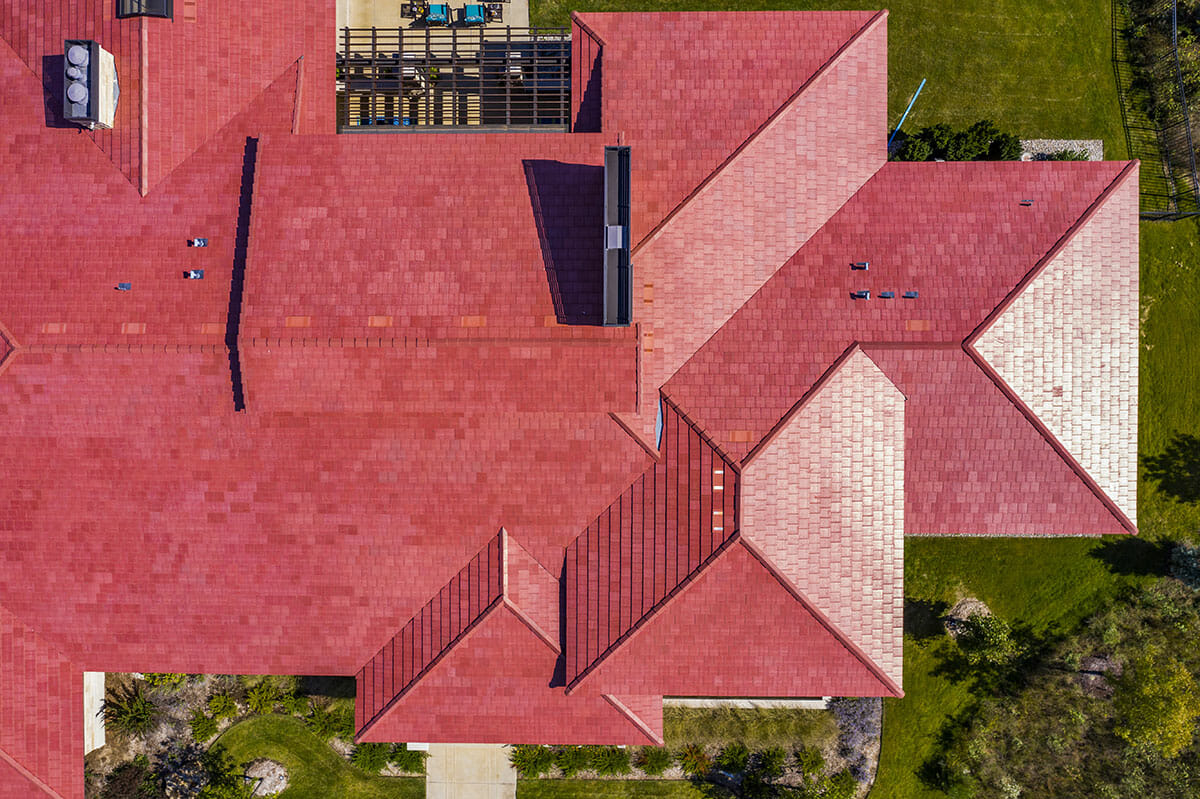
Professional inspection ensures no damage goes undetected
OSB vs. Plywood — What’s the Difference?
Plywood: Multiple thin wood veneers bonded with adhesive, alternating grain direction. Stronger for its thickness, handles moisture exposure better than OSB, holds fasteners well even after some moisture exposure. Common in homes built before the mid-1990s.
OSB (Oriented Strand Board): Wood strands compressed and bonded with adhesive. More uniform in thickness, less expensive than plywood, and the dominant product in homes built since the mid-1990s. Performs comparably to plywood under normal conditions but is more sensitive to prolonged moisture exposure — edges swell and delaminate when wet.
In practice, both materials perform adequately under properly installed roofing systems. The meaningful difference shows up when moisture has been present — OSB failure from moisture exposure tends to be more visible and more complete.
How Decking Gets Damaged
Active roof leaks: Water infiltrating through failed shingles, flashings, or pipe boots saturates decking and causes rot or delamination over time. Even small leaks, if sustained, cause significant decking damage.
Ice dam water infiltration: Water backed up behind ice dams infiltrates below shingles and reaches the decking at the eave. This is one of the most common decking damage patterns in Northwest Indiana homes.
💡 Pro Tip
Schedule a professional inspection within 30 days of any major storm. Early detection prevents costly repairs down the road.
Condensation from inadequate ventilation: Moisture rising from the living space condenses on underside of cold decking in winter. Chronic condensation causes slow deterioration that may not be visible until full rot develops.
Original installation defects: Improper gap spacing during original installation can cause buckled panels when wood expands seasonally.

Quality materials and expert installation make the difference
How We Assess Decking During Re-Roofing
During tear-off, we walk the entire deck surface and assess:
- off, we walk the entire deck surface and assess:
- Any areas that feel soft or spongy underfoot
- Visual signs of staining, mold, or delamination
- Edge deterioration (common with OSB after moisture exposure)
- Any areas of obvious rot or structural compromise
We photograph every area of concern and show you before replacing anything. We charge by the sheet (4×8 panels) for replacement — you know the cost before we proceed.
We never replace decking that doesn’t need replacement. Our reputation depends on honest assessments, not padding job costs with unnecessary materials.

Alamo Roofing serves Lake County, Porter County & northern Illinois
What Decking Replacement Costs
Standard OSB or plywood replacement: $85-$150 per sheet (4×8 panel) installed, depending on accessibility and location. Each sheet covers 32 square feet.
Original plank decking (older homes): Some Crown Point, Hammond, and older Portage homes have original solid-board plank decking. Replacing planks requires more time than panel replacement — typically $4-$8 per square foot.
📞 Need Help?
Alamo Roofing provides free drone inspections across Northwest Indiana. Call (219) 248-2194 for a no-obligation assessment.
The Red Flag: Multiple Layers on Old Decking
Indiana and Illinois allow a maximum of two shingle layers. Homes with two existing layers must have both removed before re-roofing. When we tear off two layers on an older home, we often find decking that hasn’t been inspected in 30-40 years. Budget for potential decking replacement on any multi-layer tear-off project — the likelihood is meaningfully higher than on single-layer projects.
Ready for Your Free Roof Inspection?
Call us at (219) 248-2194 or book online below.
Mon–Fri 9AM–5PM | Sat 9AM–3PM | 24/7 Emergency Storm Response
Schedule Your Free Roof Inspection
Get Your Free Roof Inspection
Free drone inspections across Lake County, Porter County & northern Illinois. Honest assessments — repair, replace, or no action needed.
Mon–Fri 9AM–5PM · Sat 9AM–3PM · 24/7 Emergency Storm Response
Schedule Your Free Roof Inspection

