
This is the most expensive mistake Northwest Indiana homeowners make after a hailstorm: they look up, see no missing shingles, and assume their roof is fine.
Hail damage doesn’t always cause immediate leaks. It bruises shingles, cracks the asphalt mat beneath, and knocks off the protective granules that shield your roof from UV exposure and weather. The roof may look intact from the ground — and start leaking 6, 12, or 24 months later.
By then, your insurance claim window has potentially closed, and you’re paying for a repair that should have been covered.
Here are the 7 signs your Lake County or Porter County roof has hail damage — even if it’s not leaking yet.
Sign 1 — Granules Filling Your Gutters
Walk to your downspouts after a significant hailstorm and look for granules — the small sand-like particles that cover asphalt shingles. A handful of granules after a storm is normal. A substantial amount filling your gutters is a red flag.
Granules are the first line of defense on your shingles. When hail knocks them off in quantity, the exposed asphalt underneath begins to dry out, crack, and deteriorate much faster. A roof that loses significant granules from hail typically ages 5-10 years faster than expected.
Sign 2 — Dark Spots or Bare Patches on Shingles
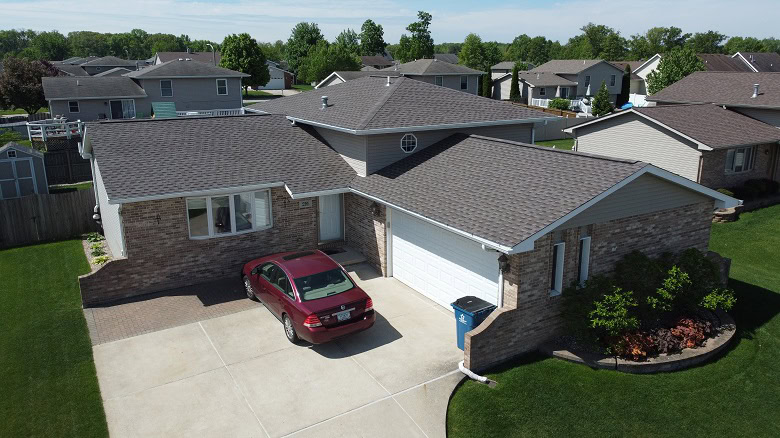
Drone inspection reveals damage invisible from ground level
From ground level with binoculars, look for dark circular spots or areas where shingles appear to have a different texture. These are hail impact bruises — areas where the granule layer was knocked off by direct hail impact.
Fresh impacts appear dark because the exposed asphalt hasn’t yet oxidized. This damage is often invisible from the ground without getting close — which is why drone inspections matter.
Sign 3 — Dented Gutters, Downspouts, or Vents
Aluminum gutters and downspouts are excellent hail damage indicators. If hailstones were large enough to dent them, they were large enough to damage your shingles. Check your:
- Gutters and downspouts for circular dents
- Metal roof vents for impact marks
- AC condenser unit for denting
- Satellite dish for damage
⚠️ Pro Tip: Document Before Repairing
Insurance adjusters use dented gutters and vents as evidence of hail size. Don’t repair metal components before your adjuster inspects them.
Sign 4 — Cracked or Split Shingles
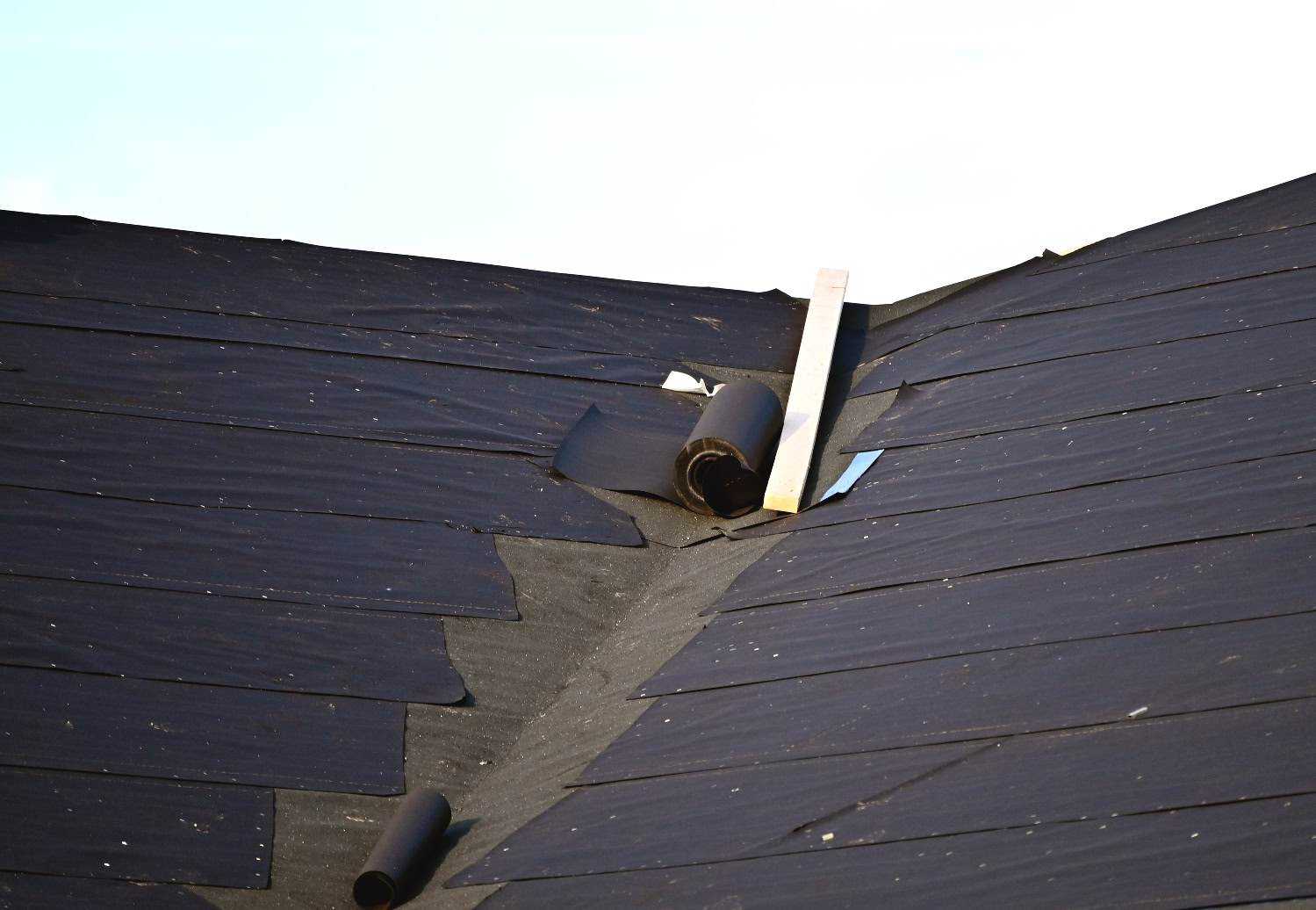
Cracked shingles expose the underlayment beneath
Unlike wind damage which tends to lift shingles, large hailstones crack shingles on impact. Check the edges and corners of shingles closest to the peak and valleys of your roof — these areas tend to show impact damage most clearly.
Cracked shingles will eventually lift, curl, or separate, allowing water infiltration. The freeze-thaw cycles Lake County and Porter County experience every winter accelerate this deterioration significantly.
Sign 5 — Random Pattern of Damage
Hail damage appears in random patterns across a roof — wherever hailstones happened to hit. Wind damage typically follows a consistent direction. If you see damage scattered randomly across your roof with no obvious directional pattern, hail is the likely cause.
This distinction matters for your insurance claim — documenting the random pattern helps establish that the damage is hail-related rather than age-related wear.
Sign 6 — Damaged Roof Valleys
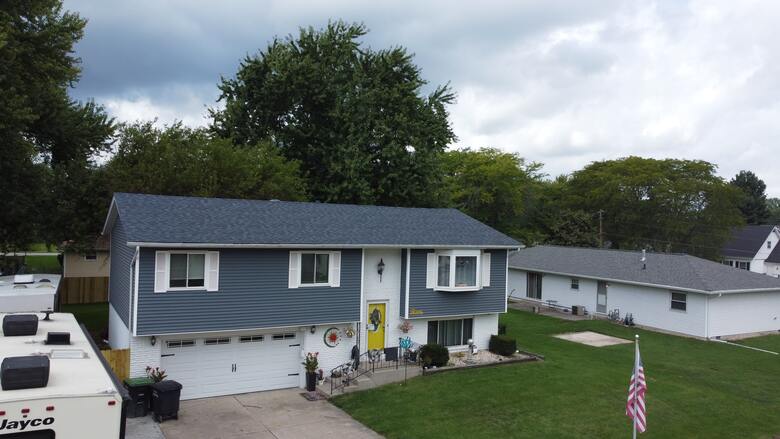
A properly maintained roof after professional inspection
Roof valleys — where two roof planes meet and water concentrates — are among the most vulnerable areas to hail impact. Check these areas carefully for cracks, exposed felt, or missing granules. Valley damage creates fast pathways for water infiltration.
Sign 7 — Interior Attic Staining
After any significant storm, check your attic with a flashlight. Look for:
- New water stains on the underside of the roof decking
- Daylight visible through the decking (a major sign)
- Wet or darkened insulation
- Any change from what you’ve seen before
If you find any of these after a storm, document them with photos immediately — these are critical evidence for your insurance claim.
🕐 Time Is Critical
Indiana homeowners insurance policies generally require timely reporting of damage. The longer you wait, the harder it becomes to get your claim approved.
Why You Should Get an Inspection Within 30 Days
Insurance companies increasingly use satellite imagery and weather data to verify whether damage is consistent with a specific storm event. The longer you wait:
- Evidence degrades on the roof surface
- Secondary damage complicates the original claim
- Your claim window may close entirely
- The insurer has more grounds to dispute the cause
Alamo Roofing provides free drone inspections across Lake County, Porter County, and northern Illinois. We’ll inspect your roof, document all damage, and give you an honest assessment — repair, replace, or no action needed.
Get Your Free Post-Storm Roof Inspection
Free drone inspections across Lake County, Porter County & northern Illinois. We’ll document all damage and give you an honest assessment.
Mon–Fri 9AM–5PM · Sat 9AM–3PM · 24/7 Emergency Storm Response
Schedule Your Free Roof Inspection

