
If there’s one roofing-related topic most homeowners know almost nothing about, it’s attic ventilation. Yet inadequate attic ventilation is one of the top three causes of premature roof failure — and it voids your GAF warranty if not corrected.
Why Attic Ventilation Matters
Your attic is not supposed to be the same temperature as your house. It’s supposed to be close to outdoor ambient temperature — both summer and winter.
In summer: An improperly ventilated attic can reach 150-160°F on a hot day. This superheated air bakes your shingles from below, dramatically accelerating aging. Manufacturers’ rated lifespans assume adequate ventilation — without it, you may get 12-15 years from shingles rated for 25-30 years.
In winter: Heat rising from your living space accumulates in an under-ventilated attic, warming the roof deck and causing the snow-melt/refreeze cycle that creates ice dams. (See our ice dam prevention guide for details.)
Year-round: Moisture from cooking, bathing, and breathing rises into the attic. Without adequate air movement, this moisture condenses on the underside of the roof deck — causing mold, rot, and structural damage invisible from the outside.

Professional inspection ensures no damage goes undetected
How Ventilation Is Supposed to Work
Proper attic ventilation is a balanced system with two components that must both be present:
Intake ventilation (low): Cool outside air enters your attic at the low point — typically through vented soffit panels along the eaves. This is the inlet.
Exhaust ventilation (high): Warm, moist air exits at the high point — typically through a ridge vent running the length of your roof peak, or through individual static vents. This is the outlet.
The physics of the system: cool dense air enters at the bottom, pushes warm air up and out at the top — passively, without any power. A properly balanced system moves air continuously even on calm days.
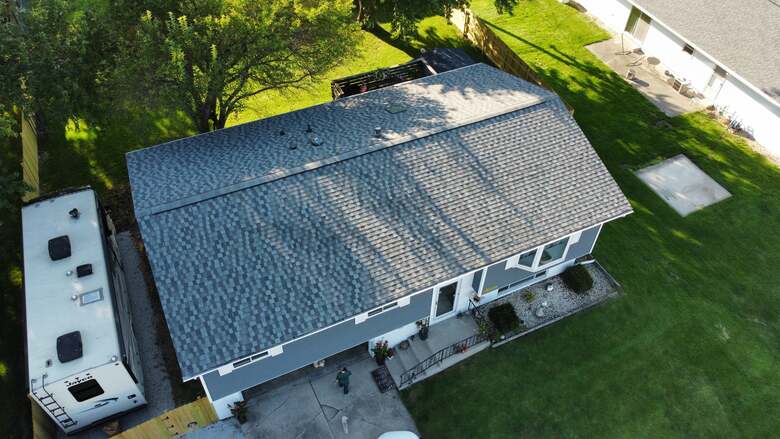
Quality materials and expert installation make the difference
The Most Common Ventilation Problems
Only exhaust, no intake (most common issue):
Ridge vents installed without corresponding soffit intake. Air can’t circulate properly without both inlet and outlet.
Soffit vents blocked by insulation:
During attic insulation upgrades, insulation is frequently pushed too far toward the eave, blocking soffit vents completely. Ventilation baffles (channels that hold insulation back from the soffit) prevent this — they’re required but often skipped.
💡 Pro Tip
Schedule a professional inspection within 30 days of any major storm. Early detection prevents costly repairs down the road.
Too few vents:
Building code requires a minimum net free area of ventilation. Many older homes, and some newer ones, simply don’t have enough vent area for the attic square footage.
Powered vents without adequate intake:
Powered attic ventilators create negative pressure that can pull conditioned air from your living space if intake is inadequate — actually increasing energy costs while providing minimal ventilation benefit.
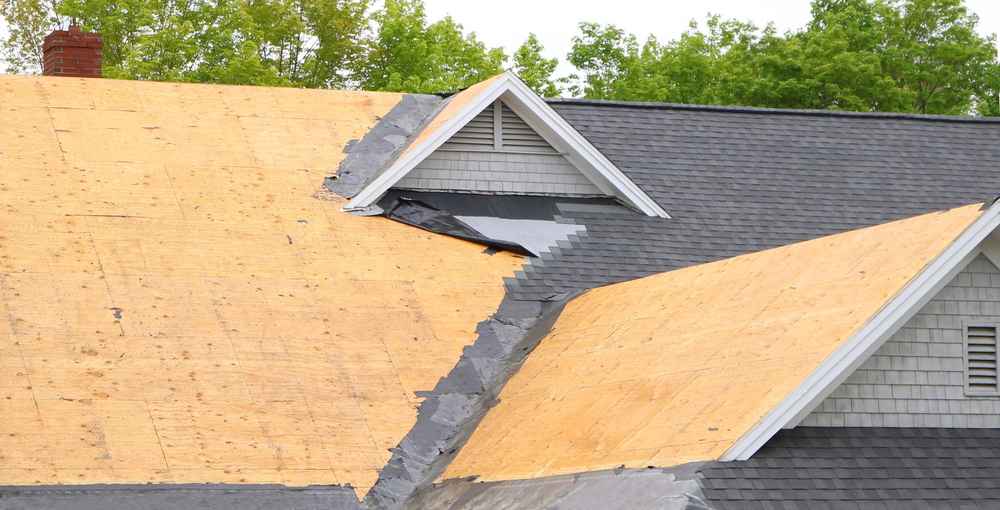
Alamo Roofing serves Lake County, Porter County & northern Illinois
The Minimum Standard for Northwest Indiana and Illinois Homes
Current building code requires 1 square foot of net free ventilation area per 150 square feet of attic floor space (with balanced intake and exhaust), or 1:300 with balanced intake and exhaust.
The Department of Energy recommends R-49 to R-60 insulation in our climate zone, installed correctly with baffles that maintain soffit vent airflow.
What Alamo Does on Every Project
On every roofing project, we assess your attic ventilation before installation begins. If we find:
- Blocked soffit vents: we install or re-install ventilation baffles
- Insufficient ridge vent: we recommend and install proper continuous ridge vent
- Missing or inadequate intake: we add soffit venting as needed
We don’t skip this. GAF requires adequate ventilation as a condition of their enhanced warranties — and more importantly, inadequate ventilation will shorten the life of the roof we install. We’re not willing to install a roof that will fail prematurely because of ventilation issues we didn’t correct.
Ready for Your Free Roof Inspection?
Call us at (219) 248-2194 or book online below.
Mon–Fri 9AM–5PM | Sat 9AM–3PM | 24/7 Emergency Storm Response
Schedule Your Free Roof Inspection
Get Your Free Roof Inspection
Free drone inspections across Lake County, Porter County & northern Illinois. Honest assessments — repair, replace, or no action needed.
Mon–Fri 9AM–5PM · Sat 9AM–3PM · 24/7 Emergency Storm Response
Schedule Your Free Roof Inspection

